


Joliy - Online Chat | Social
4.43.00 Reviews
App Specs
- Version
- 1.1.5
- Updated On
- License
- Free
- Downloads
- 10,000+
- Developer
- ABSOLUTE MARKET ONLINE LLC
- Categories
- Communication
- Platform
- Android
Screenshots
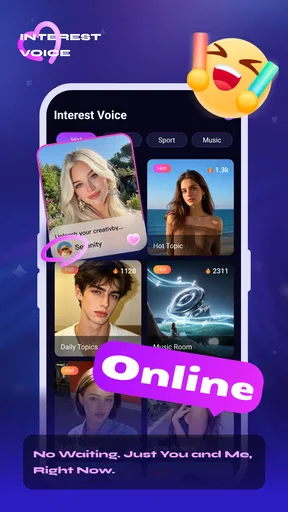



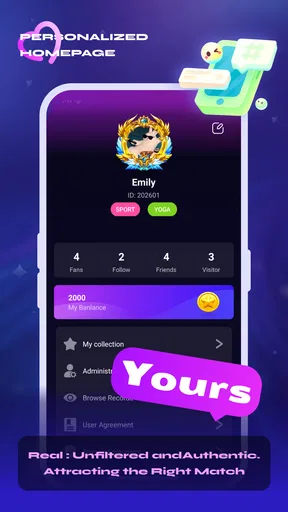
 Analysis by AppCompare
I approached Joliy - Online Chat | Social as a communication app for people who want to meet around shared interests rather than keep every conversation tied to existing contacts. Its basic idea is easy to understand: connect with friends, discover people linked by hobbies, and use chat as the center of those exchanges. After spending time with it, I found that its appeal depends less on replacing every messenger on your phone and more on whether you want a separate space for interest-based conversations.
The app is free to install, which makes trying it fairly low-risk, although it includes optional purchases ranging from $0.99 to $99.99 per item. It is published by ABSOLUTE MARKET ONLINE LLC and sits in the communication category. The store presents it as “Friends, Interest | Hobby Share,” while the short description is simply “Joliy.” Those labels are brief, so the practical question is more important: does it feel useful when you want to start or maintain conversations with people who share a particular interest?
How Joliy feels when conversations begin to move
My first impression is that Joliy is best understood as an interest-led social layer, not as a replacement for a work messenger, a family group, or a highly established chat service. That distinction matters because the experience you want from a hobby community is different from the experience you want from a utility app. In a hobby setting, discovering the right people and keeping the discussion focused can matter more than having every advanced messaging tool available.
In ordinary use, I would expect the app to feel most responsive when I keep my activity focused: checking conversations, replying to a few people, and moving between interest-related discussions without treating it like an always-open broadcast feed. That is also the way I would recommend starting. Rather than trying to build a large network immediately, I would choose one or two interests and see whether the conversations feel natural. This gives you a better sense of the community quality than a quick look at the download screen.
The current version is 1.1.5, so I would approach it as a relatively early-stage product rather than a mature platform with years of refinement behind it. That does not automatically make it unreliable, but it does affect expectations. Small social apps can feel pleasantly simple at first, while their real value depends on how consistently people return, respond, and keep discussions welcoming.
One useful habit is to treat your first session as a setup and observation period. Read before posting, notice whether discussions are genuinely organized around hobbies, and avoid sharing personal details too quickly. This is especially sensible because the app carries a Mature 17+ content rating. The rating is a reminder to use normal social-app caution, particularly if you are joining conversations with people you do not already know.
What speed means in a social app
Speed here is not only about how quickly a screen opens. For Joliy, perceived speed also comes from how quickly you can understand where a conversation belongs, find a relevant person, and return to a discussion without losing your place. An app can technically respond quickly and still feel slow if its social structure makes every interaction difficult to follow.
Worth Reading Before You Choose

Flipboard Shows What News Apps Must Do Beyond the Feed

Switching to Android Auto Means Rethinking Your Driving Routine

Google Calendar Makes a Crowded Week Easier to Manage

Ludo King Makes the Most of the Minutes Between Plans

Baby Panda World Brings Quick Play to Modern Phones, but Its Game Library Feels Busy

ESPN’s Live Game View Makes Following Close Games Easier
I would judge the experience in short bursts first. Open it when you have a few minutes, check whether the conversation flow is easy to understand, and try composing a reply without overcomplicating the process. That approach is more realistic than expecting it to become your main communication hub on the first day. If your interest is niche, the quality of matching and participation will probably influence your impression of speed more than the app’s basic transitions.
A practical scenario would be planning a weekend activity with people who share the same hobby. Instead of scattering the discussion across unrelated group chats, you could use Joliy as the place to introduce the idea, see who is interested, and continue the conversation in one context. The benefit is organizational: the topic has a home. The trade-off is that the plan only works well if the right people are active and willing to reply.
Heavy-use moments and conversation load
The more demanding test is not opening the app once; it is returning repeatedly while several conversations are active. A hobby-based service can become busy when a popular topic attracts many replies, when multiple groups discuss similar subjects, or when you move between friendly chats and broader interest conversations. In those moments, I would pay attention to whether the app helps me separate useful replies from background noise.
My advice is to avoid using one conversation as a catch-all for every subject. If a discussion begins with recommendations and turns into event planning, create a clearer boundary in your messages or move the planning into a more focused exchange when possible. This is not merely a social etiquette tip. It reduces the amount of scrolling and makes it easier to recover the important details later.
Another overlooked trade-off is notification pressure. Interest-based apps can encourage frequent checking because new replies are unpredictable. If you are already managing several messaging services, Joliy may add another stream that competes for attention. I would decide in advance when to check it instead of letting every conversation dictate the rhythm of my day. For casual users, that makes the app feel lighter; for highly active users, it may reveal whether the service has enough organization to justify regular use.
Heavy use also exposes the difference between a social discovery app and a private messenger. A private messenger is usually built around people you already trust and conversations with a clear purpose. Joliy’s interest angle can introduce more variety, but variety brings more moderation, privacy, and relevance decisions for the user. I would not use it as the sole place for sensitive plans or confidential information. Its stronger role is starting connections and keeping hobby-centered exchanges together.
Reliability, continuity, and recovering from interruptions
Reliability in a chat app includes more than staying open. I want to know whether I can return after a break and understand what happened, whether a conversation remains coherent, and whether I can pick up a discussion after my phone has been busy elsewhere. Those are the moments that determine whether an app becomes part of a routine or remains something I occasionally inspect.
With an early version such as 1.1.5, I would keep expectations practical. If a conversation matters, I would restate the key point when returning rather than assuming every participant saw the same context. For example, if people are discussing a shared hobby project, I would summarize the agreed plan in a short message before adding a new suggestion. That creates a recovery point for anyone who missed earlier messages and reduces confusion when the conversation becomes active again.
This is also where Joliy may be less convenient than a familiar mainstream messenger. Established alternatives often benefit from deeply ingrained habits: everyone already knows where messages are, how groups work, and how to contact a person directly. Joliy has a different advantage when the goal is discovery around interests, but it may require more patience while you learn how its community spaces behave.
I would also separate social reliability from technical reliability. Even if the app runs smoothly, a quiet interest area can feel unsuccessful because few people respond. Conversely, a lively discussion can make a simple interface feel highly effective. Before deciding that Joliy is or is not working for you, give the specific interest space enough time to show its character. The useful test is not just whether the app opens, but whether it helps you maintain conversations you actually care about.
Device constraints and sensible expectations
Joliy supports devices running Android 7.0 or later, which gives it a broad compatibility range for Android users. That does not mean every phone will provide the same experience. Older hardware, limited free storage, aggressive background restrictions, or a crowded notification system can all make a communication app feel less dependable, even when the app itself is functioning normally.
If you are using an older phone, I would keep the experiment simple at first. Run Joliy without several demanding apps competing in the background, check whether switching away and returning preserves your place, and notice whether your device becomes unusually warm or sluggish during longer sessions. These observations are more useful than assuming that a compatible operating system guarantees identical performance on every handset.
Resource demands are especially relevant for people who keep multiple social apps installed. A communication app earns its place when it offers a distinct purpose. If Joliy merely duplicates conversations you already have elsewhere, the extra notifications and storage may not be worth it. If it gives you access to a hobby community you cannot find in your normal contacts, the additional app becomes easier to justify.
I would also recommend reviewing your notification habits after installation. Keep alerts for conversations you genuinely want to follow, and silence anything that turns the app into background noise. This is a small adjustment, but it can change the perceived performance of the whole experience: fewer interruptions make the app feel more deliberate, while constant checking can make even a lightweight service feel demanding.
Who will get the most from Joliy?
I think Joliy is most suitable for someone who wants to meet or talk with people through shared interests, especially when their existing contact list does not provide that community. It may suit a person exploring a new hobby, looking for friendly discussion, or wanting a separate identity for interest-based socializing. The app’s focus gives those users a reason to try it beyond ordinary one-to-one messaging.
It can also work for someone who dislikes mixing personal contacts with hobby conversations. Keeping those areas separate can make your everyday messaging less cluttered. A useful workflow is to use Joliy for discovery and early discussion, then decide carefully which connections deserve a more direct or long-term channel. That keeps the app useful without forcing every new contact into your main social circle.
I would be more cautious if you need a fully established communication system for work, family emergencies, or critical coordination. In those situations, familiarity, dependable contact coverage, and predictable group behavior are usually more important than interest discovery. I would also skip it if you are looking for a completely private, tightly controlled space or if you do not want to interact with people outside your existing network.
The Mature 17+ rating is another reason to think about suitability before inviting younger users. I would not treat this as a general family chat environment. Adults should still use judgment about profiles, conversations, and personal information, just as they would with any social service that connects people beyond their known contacts.
Free access, optional spending, and long-term value
Because the app is free, the sensible way to evaluate it is through actual usefulness rather than the promise of a large feature set. Install it, choose a narrow interest, and see whether you can find conversations worth returning to. If the app becomes a place where you regularly exchange useful ideas or meet compatible people, optional purchases may be easier to assess. If the community does not fit, spending more will not solve the central problem.
The available in-app purchase range is wide, from $0.99 to $99.99 per item. I would be especially careful with the highest-priced options and would not buy anything until I understood exactly what it changes in my experience. A free communication app can remain valuable without purchases, but the value of any optional item depends on whether it improves a real limitation rather than simply encouraging more activity.
My own rule would be to use the free experience long enough to identify a specific need. For example, if I cannot explain what a purchase would help me do better, I would leave it alone. This is a better test than buying first and hoping the social experience becomes more engaging afterward.
How it compares with familiar communication choices
Compared with a standard messenger, Joliy’s clearest distinction is the interest-centered starting point. Traditional messengers are excellent when you already know who you want to contact. Joliy is more relevant when the conversation itself is the reason you are looking for people. That makes it complementary rather than automatically superior.
Compared with broad social networks, it may feel more purposeful if you want hobby discussion instead of a general stream of updates. The trade-off is reach. Larger networks often make it easier to find a busy community, while a smaller or newer service may require more patience before you find the right group of people. I would choose Joliy for focused discovery, not simply because it is another place to post.
Compared with specialized forums, the app’s chat orientation may feel more immediate and personal. Forums can be better for searchable, long-form knowledge that remains useful months later. Joliy makes more sense for ongoing conversation, casual exchanges, and building familiarity with people around a shared interest. If your main goal is to create a permanent reference library, a forum or dedicated knowledge platform may serve you better.
My performance verdict after weighing the trade-offs
My overall view is cautiously positive. Joliy is most convincing when treated as a focused social companion for hobby conversations, not as an all-purpose replacement for every messenger. Its free entry, communication focus, and interest-based idea make it easy to test. The average rating is 4.4 from around a hundred ratings, and the app has passed the 10K+ install mark, which suggests that it has attracted an initial audience without making it a huge mainstream network.
The main friction is not something I would solve with a faster phone or more frequent checking. It is the need to find the right community and decide how much attention the app deserves beside the services you already use. Early-stage products can be enjoyable when their purpose is clear, but they can also feel thin if the conversations around your interests are quiet or poorly organized.
I would recommend trying it if you are an adult looking for interest-based connections and are willing to evaluate the community patiently. Start with one hobby, avoid oversharing, control notifications, and wait before considering optional purchases. Those steps give you a fair test while protecting your time and privacy.
If you need dependable communication with people who are already in your life, I would choose the messenger they already use. If you want searchable long-term expertise, I would look toward a specialized forum. But if your goal is to discover friendly conversations built around shared interests, Joliy has a clear reason to exist. For that specific use, it is worth a careful trial rather than an automatic download or an automatic dismissal.
My final recommendation: try Joliy for focused hobby discovery, keep expectations realistic about an evolving platform, and judge it by the quality and continuity of the conversations you find—not by how many social apps you can replace with it.
Pros
- Simple interface makes starting conversations quick and easy.
- Offers a casual space to meet people beyond your existing social circle.
- Chat-focused design keeps interactions more direct than feed-based networks.
- Useful for discovering users with similar interests and social preferences.
- Available on mobile
- making conversations accessible while you are on the go.
Cons
- The quality of conversations can vary greatly between users.
- Some features or interactions may require in-app purchases or subscriptions.
- New users may encounter inactive profiles or slow replies.
- Public social apps can carry privacy and unwanted-contact concerns.
- A stable internet connection is needed for smooth messaging and profile loading.
FAQs for Joliy - Online Chat | Social
What is Joliy - Online Chat | Social, and what can I do with it?
Joliy - Online Chat | Social is designed for meeting and communicating with other people through online conversations. After creating a profile, users can typically browse available members, start chats, and discover new social connections. The experience is focused on casual interaction, so it may appeal to anyone looking for conversation, friendship, or a simple way to connect with people beyond their existing contacts.
Is Joliy - Online Chat | Social free to download and use?
The application can generally be downloaded at no initial cost, but some features may require in-app purchases, credits, or a subscription. Depending on the current version and your region, messaging, profile visibility, or other premium functions may have usage limits. Before spending money, review the pricing information shown inside the app and check whether subscriptions renew automatically through Google Play or the App Store.
Is Joliy safe for meeting and chatting with strangers?
As with any social or chat platform, users should be careful when interacting with people they do not know. Avoid sharing your home address, financial information, passwords, private documents, or precise daily routine. Use the available blocking and reporting tools if someone behaves suspiciously or makes you uncomfortable. Profiles and messages may not always represent a person accurately, so maintain sensible boundaries and never send money to online contacts.
Does Joliy require an account, and what information should I provide?
You will generally need to create an account or sign in before using the main social and chat functions. The app may request basic details such as a name or nickname, age, profile photo, gender, and communication preferences. Provide only information you are comfortable displaying publicly, and read the privacy policy to understand how profile data, messages, device information, and optional permissions are handled.
Can I control notifications, privacy, and unwanted conversations in Joliy?
Most social chat applications provide settings for notifications, profile visibility, and communication preferences, although the exact controls can vary by version. Check the account and privacy sections after installation to limit alerts or adjust who can contact you. If a conversation becomes inappropriate, use the block, mute, or report options where available. Keeping the app updated can also provide the latest safety improvements and bug fixes.


